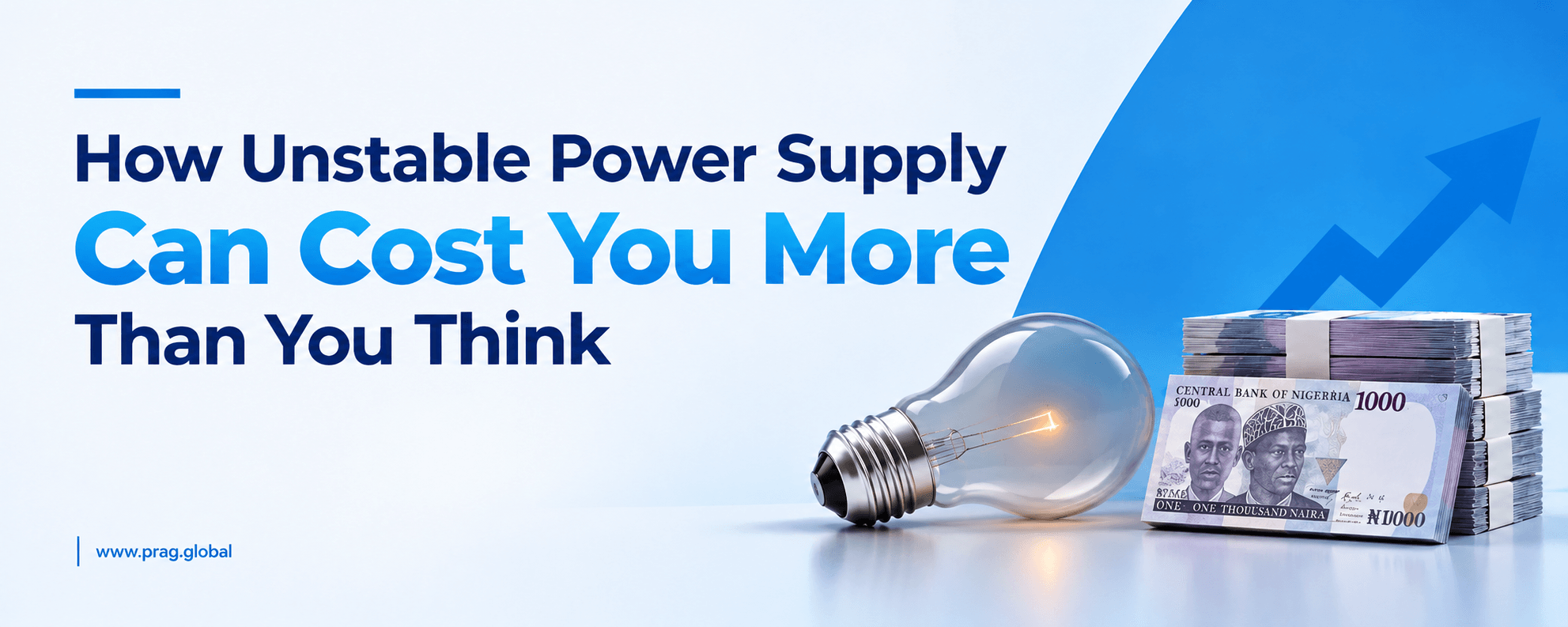
In Nigeria, unstable electricity can mean spending money you didn't plan to spend. You buy fuel to power your generator, pay to repair an appliance that suddenly develops a fault, or lose business hours because there is no light to keep things running.
These expenses may seem small at first, but when they happen repeatedly, they can take a serious toll on your pocket.
And that is how unreliable power supply can cost you more than you think.
1. Your Appliances Could Develop Faults
That refrigerator you bought for hundreds of thousands of naira is supposed to last for years. The same goes for your television, air conditioner, and washing machine.
However, when voltage is consistently too high or too low, certain appliances may struggle to operate properly or suffer damage. You might end up paying a technician to fix your freezer today and dealing with another appliance fault a few weeks later.
The frustrating part? You may not immediately realise that voltage fluctuations are the problem.
2. Your Generator Could Be Taking More Money Than You Realise
Let's be honest, buying petrol or diesel for a generator is already an expense most households and businesses would rather avoid.
When public power supply becomes unreliable, you may find yourself buying fuel more frequently just to keep the lights on, preserve food, charge devices, or continue working.
For a small business, those daily fuel expenses can take a noticeable bite out of profits. And that is before you factor in servicing, oil changes, and unexpected repairs.
3. Your Business Could Lose Money While You Wait for Power
Imagine running a cold room business, a frozen food shop, or a supermarket. If your freezer stops maintaining the right temperature during a prolonged outage, your stock could be at risk.
Now think about a salon whose clippers and dryers cannot operate, or an office where workers cannot work without power.
The problem is not just the lack of electricity. It is the customers you may lose, the orders you cannot complete, and the money you may have to spend putting things right.
4. Food and Other Household Items Could Go to Waste
You stock up on meat, fish, chicken, and other frozen foods because buying in bulk can be more convenient. Then the power goes out for hours, and your freezer is no longer maintaining a safe temperature.
If the food spoils, you have lost more than electricity. You have lost the money you spent buying it, too.
This can be particularly frustrating when you have just done your monthly shopping and stocked up the house.
5. Your Time and Productivity Could Suffer
You are in the middle of an important online meeting when the power goes off. Your Wi-Fi stops working, your laptop battery is running low, and you still have work to finish.
Or perhaps you run a business and have to postpone customers orders because your equipment cannot operate.
These interruptions may seem minor, but when they happen repeatedly, they can affect your productivity, limit how much work you get done, and even reduce how much money you make.
What Can You Do About It?
You may not be able to control how regularly electricity comes from the grid, but you can take steps to manage its effects.
Start by identifying your biggest problem. Are your appliances exposed to voltage fluctuations? Do you need backup power when electricity goes off? Or are you spending too much on generator fuel?
PRAG offers power solutions to help address different needs:
- PRAG Central Stabilizer helps regulate voltage for compatible appliances.
- PRAG Inverter provides backup power when configured with a suitable power source.
- PRAG Solar offers solar power solutions for homes and businesses.
The right choice depends on your equipment, power requirements, and budget.
Visit www.prag.global to explore your options.
Unstable power supply may not be in your hands, but how you prepare for it is. Protect your appliances, plan for outages, and make power-related expenses easier to manage with the right solution.